Guide to low-pitched roofs
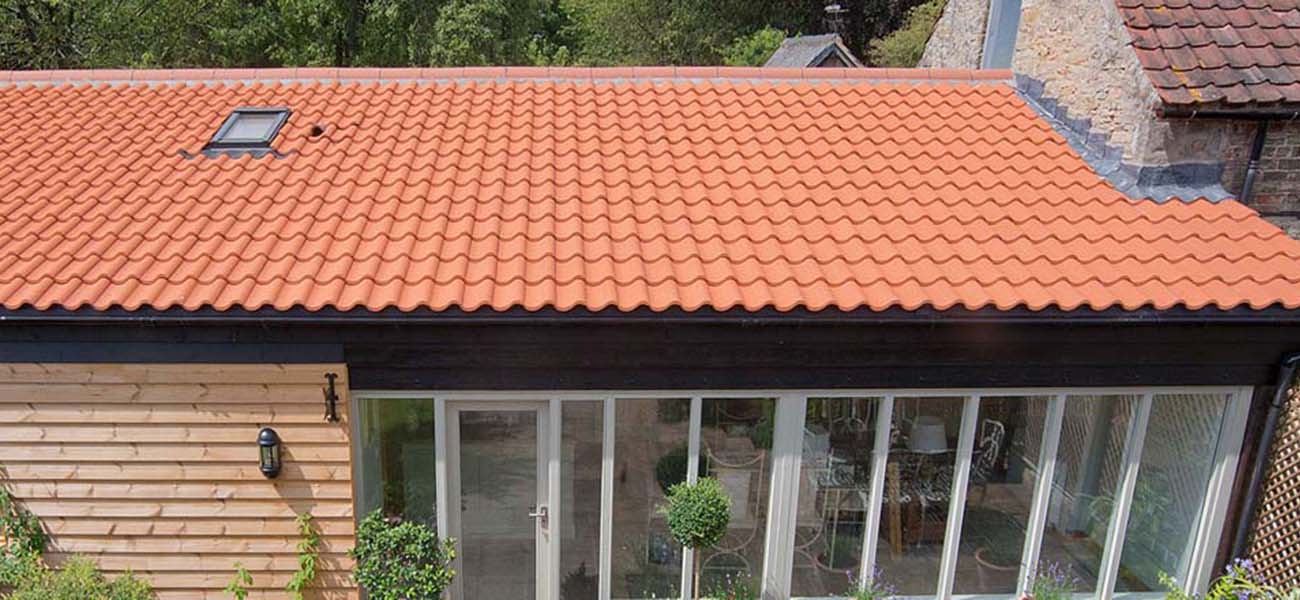

A low-pitched roof offers many benefits and is a suitable choice for a wide range of building types. Our guide to low-pitched roofing includes everything housebuilders, developers, architects, specifiers and installers need to know about this roof system and how using Marley’s applicable products gives you the best chance to achieve your desired outcome.
Read on to learn more about:
- What a low-pitched roof actually is
- Technical considerations when specifying a low-pitched roof system
- What low-pitched roof systems does Marley offer
- How installation works for a low-pitched roof system
- Maintaining a low-pitched roof system
- Solar PV on a low-pitched roof system
- Marley warranty on its low-pitched roof systems and products
- Low-pitched roof standards and regulations
- Low-pitched roof system cost
What is a low-pitched roof?
A low-pitched roof typically has a pitch between 10° and 30°. Anything lower is considered a flat roof and anything higher is considered a pitched roof. In between those pitches, a low-pitch roof is a versatile choice for extensions, new-builds and other buildings where you need a lower roof to avoid blocking light or views.
When designed and installed correctly, a low-pitch roof does not sacrifice thermal performance, ventilation, water drainage or protection for your building. Aesthetically, a low-pitch roof offers a sleek, modern look with instant kerb appeal.
Technical considerations when specifying a low-pitch roof system?
A low-pitch roof design can push some elements of the system to their limits, so it is important to make several considerations as part of the design process, including:
- Water drainage – A low-pitched roof will discharge water at a lower rate than a pitched roof, potentially allowing water to linger on the surface and cause problems for the overall roof system. Dealing with this issue requires you to limit rafter lengths, increase tile headlaps and install underlay with enough drape to avoid the possibility of water pooling. It is also important to ensure there is sufficient support and fall at the eaves so that water drains effectively into the gutters.
- Water shedding – Related to this is the risk for excessive water shedding. Low-pitch roofs are often chosen for extensions and therefore can sit underneath larger pitched roofs which shed rainwater directly onto them. Potential water shedding loads should be considered as part of the design process and avoided where possible.
- Vulnerabilities – A lower pitch can expose different vulnerabilities in a roof system which must be considered. For example, underlay can sag and eaves can become common places for leaks to occur. BS 5534 recommends a maximum drape of 15mm to avoid flapping noises and excess wind loading. Counter battens and sarking can also be used to make roof base layers more watertight.
- Headlap – The headlap prevents water from creeping under the tiles, so it’s very important that you always check a roof tile’s headlap is suitable for a low-pitched roof before buying them. The maximum and minimum headlap is different for low-pitch roof systems, so tiles must be capable of handling it, then also installed correctly. Typically, the minimum headlap on tiles used at low pitches is 100mm.
All Marley low-pitch products are tested rigorously to ensure they are suitable for low-pitched roof systems. Our technical team can work with you to create a unique specification for your project and build in all the right products so that it performs as intended.
What low-pitched roof products does Marley offer?
Marley offers a full range of products for low-pitched roofs, including a wide selection of low-pitch roof tiles which can be used to match any aesthetic. Clay, slate and concrete tiles are available in a range of colours and styles allowing you to unleash your creativity and create the perfect low-pitched roof system.
This includes tiles suitable for a range of different pitches so you can always find a good fit for your system, such as:
- Mendip 12.5 concrete interlocking tile (minimum pitch 12.5°) – This interlocking concrete tile has been designed for extension projects and has special weatherproofing channels which mean it can be used down to a very low pitch.
- Cedar Shingles (minimum pitch 14°) - A beautiful, natural building material that showcases the warmth of timber for any roofing and facade development. Colour matures with the seasons and years to add a unique aspect to your project.
- Lincoln clay interlocking tiles (minimum pitch 15°) - An easy-to-fit traditional clay pantile with an open gauge design and a traditional s-curve profile with a thin leading edge.
- Wessex concrete interlocking tiles (minimum pitch 15°) - The low-profile Wessex is at the forefront of low pitch performance: designed to shed water efficiently with clean, simple lines and a minimalist style.
Our low-pitched roof tiles are compatible with all elements of Marley roofing products and can be integrated into the design and specification without any hassle. They are also covered by our 15-year full system guarantee on any roof system we have specified, and where all components have been tested to perform together as a complete roof system.
How does installation work with low-pitched roof systems?
The installation process for a low-pitched roof is the same as with any roof system. Once it is designed and specified, your installation team will deliver it quickly, efficiently and professionally.
While some aspects of low-pitched roofs can be more complex than a pitched roof, the installation process tends to be faster because there are generally fewer materials involved and a smaller roof space overall. That can make low-pitched roofs preferable if you need a quicker install option.
Maintaining a low-pitched roof system
Maintenance for a low-pitched roof system is not especially different to those of a steeper pitched roof. However, due to the nature of low-pitched roofs, it is advisable to make regular checks to ensure it is performing as planned.
It may require bringing in someone with specialist knowledge who understands the specific challenges that come with low-pitched roof systems, so nothing is missed. Likewise, if repairs are needed, it is advisable to choose an experienced professional as unsuitable repairs can make problems worse.
Despite that, a well-specified and robustly built low-pitched roof should not cause any additional risks or worries when compared to a regular pitched roof. Marley low-pitched roof systems are professionally designed, specified with high quality materials and come with a 15-year guarantee for the ultimate peace of mind.
Can you have solar on a low-pitched roof system?
Yes, there is no reason you cannot add solar to a low-pitched roof system in the same way as you can with a flat roof or pitched roof. You must consider whether your ideal solar solution is compatible with the pitch of the roof, but solar is a viable addition for your system in most cases.
The most straightforward solution is to specify the Marley SolarTile® system on roofs with a minimum pitch of 20°. The Marley SolarTile® is fixed to the roof in line with BS 5534:2014+A2:2022 and forms a fully integrated part of the finished system. This leaves a weathertight finish without the need for additional frames or fixings.
This sleek, modern finish also offers outstanding wind performance over four times higher than similar products from competitors, and meets the highest European fire safety standards, achieving BRoof T1, T2, T3 and T4. Finally, Marley SolarTile® is compatible with the full range of Marley products and is provided with a 30-year panel efficiency guarantee on top of the regular 15-year full-system warranty.
How much does a low-pitched roof system cost?
There is no fixed price for any system, but a low-pitched roof system will generally cost less than a full pitched roof system in most cases because it uses fewer materials and will normally cover a smaller area. That reduces the up-front costs and makes installation faster in most cases, potentially offering further savings depending on your specific circumstances.
The most cost-effective way to achieve the low-pitched roof system of your dreams is to choose an integrated low-pitched roof system from Marley. We will design, specify and support installation of your low-pitch roof, giving you complete peace of mind that all products are in sync, and the installation quality is extremely high. Furthermore, if you choose us for your full system, you will receive our 15-year guarantee and can rest easy for the long-term.
Does Marley offer a warranty on its low-pitched roof systems and products?
Choosing a Marley low-pitched roof system means you get complete peace of mind. We offer a 15-year warranty on any roof system we have specified, where all components have been tested to perform together as a complete roof system.
Our Technical Team is able to advise you at every stage and can help you create the perfect low-pitched roof system on your next project. Contact us today to learn more and discover your ideal low-pitched roof system.
Disclaimer - The information shared in this blog is correct at the time of publication. Guidance, standards, and best practices may change over time, so if you’d like further clarification or the latest updates, please get in touch with the Marley Technical Advisory Team, who will be happy to help.
Category: Roof Tiles Roofing Technical