Can MCS-certified panels and roof-integrated mounting kits be used together?
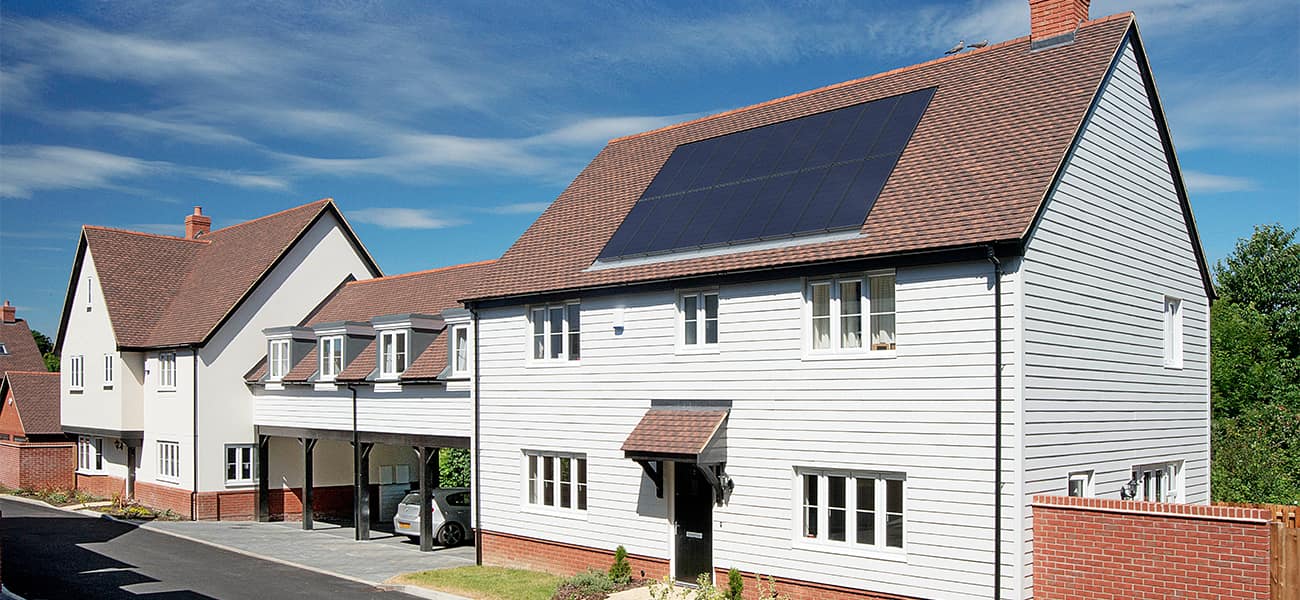
When a solar PV system is installed, it needs to do more than just generate electricity. It should be weather-tight, safe and able to meet fire and wind resistance requirements.
Ensuring a solar product and its installation are certified under the Microgeneration Certification Scheme (MCS) provides peace of mind that these conditions are met. However, the solar market can be complex, and there have been many cases where installers have fitted MCS-certified panels and flashings without realising the products have not been tested together. In these cases, the finished system is not eligible for MCS certification.
What is MCS certification?
The Microgeneration Certification Scheme (MCS) is a government-backed quality assurance scheme that certifies small-scale renewable energy products and the companies that install them.
MCS certification is not a legal requirement, but it gives confidence that a renewable system is safe, reliable and long-lasting. It is also a prerequisite for certain financial incentives, such as government funding schemes or export tariffs that allow homeowners to sell excess energy back to the grid.
Why are some solar panel and mounting kit combinations not MCS compliant?
It’s a common misconception that if a solar panel is certified to MCS 005 (Solar PV Standard) and a roof-integrated solar mounting kit is certified to MCS 012 (Pitched Roof Mounting Kits), they can be used together automatically.
In reality, both the panel and the mounting kit must be tested together as a system to achieve the required BRoof(t4) fire classification. If this combined testing has not been carried out, then the installation will not be MCS compliant, even if the individual components are.
This means an installer could unknowingly fit MCS-compliant solar panels and an MCS-compliant mounting kit but still be unable to issue an MCS certificate for the system.
How to tell if a system is not MCS compliant?
The only truly compliant installation is one where a roof-integrated solar mounting kit is used in combination with one of the specific solar panels listed on its MCS 012 certificate. Each approved panel is identified by its model code and has been tested with the kit to achieve the required fire classification.
While there may be solar panel systems that are independently certified to MCS 005 and mounting kits that are certified to MCS 012, this does not mean that they are certified as a combination.
To ensure a solar installation is MCS compliant, all parties – including the merchant, the buyer, and the installer – should verify the MCS 012 certificate to confirm that the mounting kit is compatible with the selected solar panels.
Is MCS compliance necessary?
Having MCS certification is not required for a product or its installation, but it gives peace of mind that a system is safe and long-lasting. It is also required if you want the system to be eligible for certain financial incentives, such as:
- Government grants: If a renewable energy system is being funded through a government scheme, the product and installation must be MCS certified.
- Export tariffs: MCS certification also makes a system eligible for export tariff schemes that allow you to sell extra energy back to the grid.
Most housebuilders require MCS certification because it’s recognised by warranty providers such as the National House Building Council (NHBC) as evidence that a renewable energy system meets the necessary quality and safety standards. While NHBC doesn’t make MCS certification mandatory, section 8.2.1.1.2 of the NHBC Standards 2025 states that solar PV products that are certified through MCS will generally be acceptable. Other certification bodies or test documentation may also be accepted if approved by NHBC.
How do I find out more about MCS-compliant solar panels and mounting kits?
With Marley, there’s no need to worry about mismatched certifications. Marley SolarTile® is a fully roof-integrated solar panel that comes as a complete kit, including all required flashings and mounts. Every element has been tested together for compatibility and compliance, giving specifiers, installers and homeowners peace of mind.
Visit our dedicated integrated solar tile page for more information or to find out more about MCS certification, contact a member of our team.
Disclaimer - The information shared in this blog is correct at the time of publication. Guidance, standards, and best practices may change over time, so if you’d like further clarification or the latest updates, please get in touch with the Marley Technical Advisory Team, who will be happy to help.
Category: Environmental Roofing Solar PV Solar Roof Tiles