How homeowners can take advantage of the Warm Homes Plan
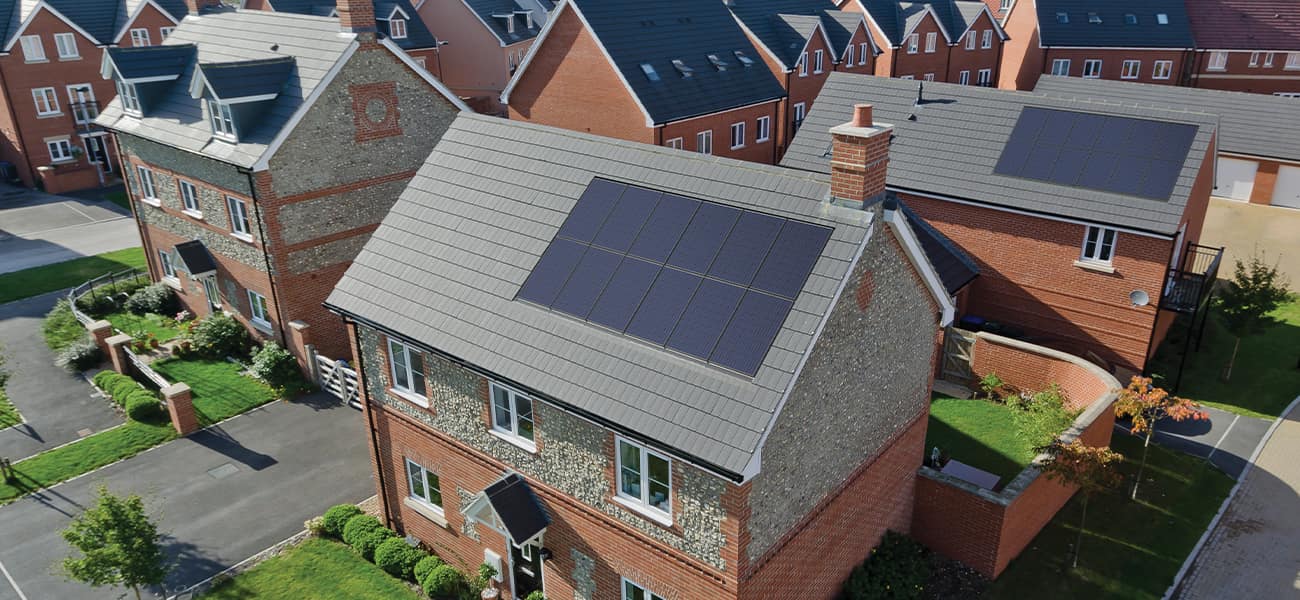

The UK government has announced new funding to upgrade the energy efficiency of homes across the country with measures including solar PV panels and solar batteries, as well as heat pumps and thermal insulation.
With plans to distribute more than £15bn in funding to households across the next five years, the government says it wants to initiate a “rooftop revolution” by tripling the current number of homes with solar panels, adding solar PV to three million homes.
The Warm Homes Plan will deliver "the biggest public investment in home upgrades in British history to cut bills, tackle fuel poverty, create good jobs and get us off the rollercoaster of international fuel markets”, says secretary of state for energy security and net zero, Ed Miliband. "This is our plan to bring the benefits of clean power to people in their homes as quickly as we can,” he adds.
Through a combination of grants, low- and zero-interest loans and support for those in fuel poverty, the Warm Homes plan will aim to make clean energy technologies more accessible, reducing reliance on fossil fuels, cutting energy bills and enabling more households to generate and store their own energy. Over time, this investment is expected to lift up to a million households out of fuel poverty and accelerate the UK’s transition to clean, homegrown power.
Who is eligible for the Warm Homes Plan?
The UK’s Warm Homes Plan, published in January 2026, is a nationwide initiative that will provide funding to private homeowners, landlords and social housing providers. The specific funding available depends on factors such as the type of property and the energy efficiency measures required. Some schemes, such as the Boiler Upgrade Scheme (BUS), are only available in England and Wales, while other funding will be allocated through the devolved administrations in Wales, Scotland and Northern Ireland.
What home upgrades are included in the Warm Homes Plan?
With the Warm Homes Plan, the government aims to make homes warmer and more energy-efficient, lifting households out of fuel poverty.
One of the main ways the plan will do this is by funding the installation of solar PV panels. Rooftop systems such as the Marley SolarTile® generate clean energy from the sun, reducing household energy bills and reliance on the energy grid. Solar battery systems will also be covered, allowing households to store electricity generated during the day so it can be used at night when the family is home.
“Solar PV is an effective way for homeowners to generate clean energy, reduce their energy bills and make their homes more sustainable,” says Lydia Hunter, Specification Manager at Marley. “The Marley SolarTile® can provide power for heating, lights, appliances and even electric vehicle charging. Since it’s designed to be installed as part of the roof, it’s an ideal choice for part of a wider roof refurbishment project, providing the perfect opportunity to add roof insulation and new roof tiles,” he explains.
Other energy efficiency measures that the Warm Homes Plan will cover include air-source heat pumps, ground-source heat pumps and thermal insulation upgrades. These measures will help homes meet the latest energy performance expectations, such as those in Approved Document L: Conservation of Fuel and Power (England) or the local equivalent.”
Is the Warm Homes Plan a grant or a loan for solar PV?
The Warm Homes Plan isn’t a single funding scheme. Rather, it brings together a variety of different funding options to help more homes improve their energy efficiency. This means that the type of funding available to homeowners through the Warm Homes Plan will depend on the energy efficiency measures being installed, as well as the household’s financial situation.
For example, the installation of solar PV panels and battery storage will most likely be financed through low- or zero-interest loans. Heat pumps will be funded through grants from the BUS. Low-income households will have additional grant-based schemes available.
How can the Warm Homes Plan save homeowners money?
The Warm Homes Plan can help households cut their energy bills by supporting the installation of solar panels, battery storage and heat pumps. Since solar panels generate electricity from the sun, they reduce the amount of power households need from the grid. When solar panels are paired with batteries, the excess energy can be stored and used during peak hours, allowing families to make the most of flexible electricity tariffs.
“Solar PV systems, such as the Marley SolarTile®, provide a practical method for homeowners to generate clean energy, reduce bills and live more sustainably,” says Lydia. “When paired with battery storage, solar PV systems can power lights, appliances, heating and even electric vehicles at all hours of the day or night.”
Savings will vary depending on the property type, existing heating system and the household’s typical energy use. The government’s plan is to rebalance how the UK uses fuel, moving away from gas appliances and using more clean electricity generated from micro renewables like rooftop solar panels, as well as offshore wind and nuclear. Over time, this approach is designed to provide homeowners with both immediate savings and long-term protection against rising fuel costs.
How do I find out more about the Warm Homes Plan?
The Warm Homes Plan runs to 2030, and some parts of the plan are still evolving – particularly the funding for solar panels and battery storage systems. Further details are expected soon. Homeowners can contact the Marley team for guidance on how our products can be used in line with the Warm Homes Plan and how to access available funding.
Disclaimer - The information shared in this blog is correct at the time of publication. Guidance, standards, and best practices may change over time, so if you’d like further clarification or the latest updates, please get in touch with the Marley Technical Advisory Team, who will be happy to help.
Category: Solar PV Solar Roof Tiles Standards