What the Warm Homes Plan means for social housing providers
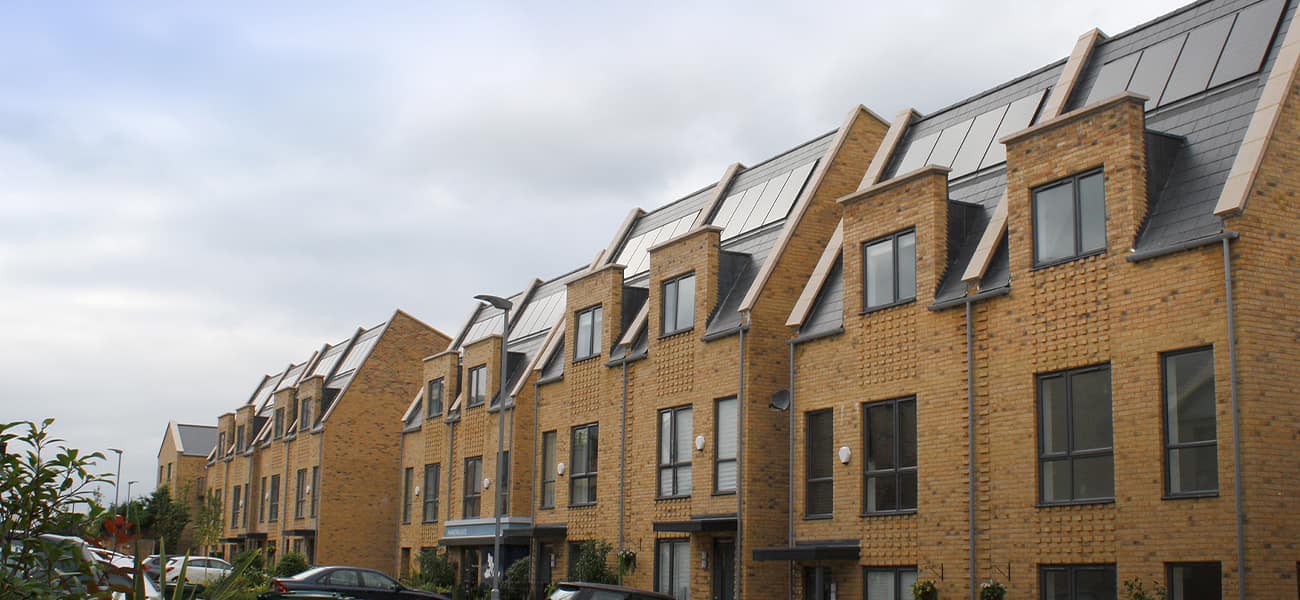

In January 2026, the UK government published its Warm Homes Plan. For social housing providers, it will provide much-needed funding for measures such as solar PV, storage batteries and heat pumps, supporting compliance with updated energy efficiency standards, while cutting energy bills and uplifting the quality of life for residents.
With £15bn set to be invested in the country's housing, and an aim to upgrade up to five million homes by 2030, the plan aims to permanently lower energy bills, tackle fuel poverty and support electrification, reducing reliance on the volatile fossil fuels market.
“Families are struggling with energy bills that are too high, and we are determined to do everything we can to bring them down,” says secretary of state for energy security and net zero, Ed Miliband. “It is clearer than ever that the future is cheap, clean, homegrown power,” he explains, adding that the Warm Homes Plan will bring the benefits of clean power to people in their homes as quickly as possible.
How is the Warm Homes Plan different from existing energy efficiency schemes?
The government is calling the plan “the biggest intervention in home efficiency and clean heat in British history.” While many of the schemes and funding streams previously existed, the Warm Homes Plan aims to consolidate and enhance them.This will help to establish a clear, long-term programme to work towards, rather than a series of short-term or piecemeal schemes. The government will also establish a new Warm Homes Agency to co-ordinate and oversee the delivery of the upgrades.
What funding is available through the Warm Homes Plan?
Social housing providers across the UK – in England, Wales, Scotland and Northern Ireland – are expected to benefit from funding through the Warm Homes Plan.The new Warm Homes Fund will support the entire home-upgrade supply chain with loans and investments, helping to bring down costs and scale up the deployment of solar panels, batteries and other clean energy technologies.
This will help social housing providers and local authorities make their upgrade programmes go further. Around £2.7bn will be available as innovative finance for investments in and loans to the home upgrade sector.
In England, initial financing will be delivered through the Warm Homes Social Housing Fund (WH:SHF) and Local Grant (WH:LG) programmes, while in devolved nations, funding will be allocated through their respective administrations. Funding for social housing providers and local authorities will be separate from homeowner-focused schemes like the Boiler Upgrade Scheme (BUS), ensuring that social housing projects receive dedicated support.
Some funding has already been allocated through previous waves of the WH:SHF, and further investment is planned as part of the Warm Homes Plan over the coming years.
What energy efficiency upgrades are included in the Warm Homes Plan?
The Warm Homes Plan will focus on energy efficiency measures that support electrification and reduce the reliance on gas appliances such as boilers and cookers.The installation of solar PV panels is a key part of this. Solar can be installed on single-family homes or across larger social housing blocks.
Lydia Hunter, Specification Manager at Marley, explains: “Rooftop solar panels, such as the Marley SolarTile®, generate electricity for heating, lighting and appliances, as well as electric vehicle charging. They can also be combined with battery storage systems, allowing households to store energy for use during peak hours, and making flexible tariffs more accessible to families.”
Other efficiency upgrades include air-source and ground-source heat pumps and thermal insulation upgrades.
The plan emphasises a whole-building approach, targeting entire streets or estates where possible. By upgrading homes together, social housing providers can maximise savings, improve residents' comfort and reduce fuel poverty.
How will the Warm Homes Plan help social housing tenants?
The Warm Homes Plan aims to help social housing tenants by reducing their energy bills and improving comfort in their homes. Government investment will help to reduce the cost of upgrades, while funding options will provide financial support so that social housing providers can carry out the necessary improvements.“Upgrading social housing with energy-efficient technologies can have a real impact on tenant comfort and bills,” says Lydia. “Heat pumps, solar PV and battery storage can help residents use energy more efficiently, reduce costs, and make larger buildings easier to manage sustainably.”
By prioritising electricity from micro renewables such as rooftop solar panels and heat pumps, alongside other clean sources like offshore wind and nuclear power, the plan aims to give households both immediate reductions in energy costs and long-term protection against rising fuel prices.
Savings will vary depending on the type of building, the number of occupants and the existing heating and electrical systems.
How the Warm Homes Plan affects compliance and minimum energy standards
As well as providing financing support for energy efficiency upgrades, the Warm Homes Plan also sets out new regulatory requirements for energy efficiency. From 2030, all social and private rented properties will need to achieve a minimum EPC rating of C, up from the current minimum of E.
These new standards are part of wider reforms of the social rented sector, with the Decent Homes Standard and Awaab's Law aiming to ensure all social tenants have safe, warm and decent homes.
By installing low-carbon technologies such as solar PV, storage batteries, and heat pumps, social housing providers can ensure their properties meet these standards and provide comfortable, affordable-to-heat homes for their residents.
How can social housing providers learn more about the Warm Homes Plan?
The Warm Homes Plan is currently set to run until 2030, and some parts of the plan are still in progress. Further details are expected soon.
Here at Marley, we have extensive experience working with councils and social housing providers across the UK. Our team is available to provide support throughout all stages of an upgrade project – from helping secure funding through to project planning, specification and construction. If you have any questions about the Warm Homes Plan and what it means for your social housing project, please get in touch.
Disclaimer - The information shared in this blog is correct at the time of publication. Guidance, standards, and best practices may change over time, so if you’d like further clarification or the latest updates, please get in touch with the Marley Technical Advisory Team, who will be happy to help.
Category: Solar PV Solar Roof Tiles Standards