What are the benefits of carbon-captured concrete roof tiles
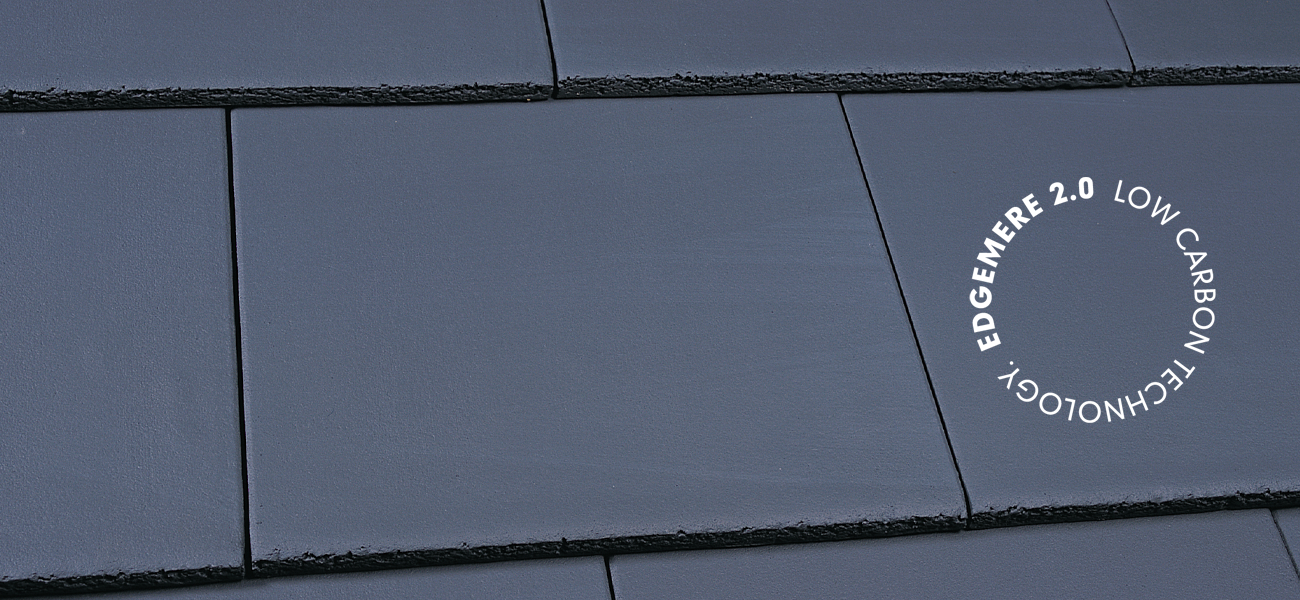 Reducing the embodied carbon of a building requires attention to every part of its construction. Structural materials are often the first area considered, but products used across the building envelope, including the roof, also contribute to its overall environmental impact.
This is creating demand for roofing materials that can support lower-carbon specifications without introducing unnecessary changes to established designs or installation practices. Carbon-capture cement technology provides one route towards achieving this, helping to reduce emissions associated with cement production while retaining the recognised performance of concrete roof tiles.
Marley Edgemere 2.0 has been developed to give specifiers, housebuilders and housing providers a lower-carbon alternative to a familiar concrete roof tile. The change takes place behind the finished product, through the cement route and the evidence supplied with each order.
What are carbon-captured concrete roof tiles?
The term carbon-captured concrete roof tile is commonly used to describe tiles supported by cement production in which carbon dioxide is captured before it reaches the atmosphere. Heidelberg Materials manufactures evoZero®, its near-zero carbon cement, using carbon capture technology at its Brevik facility in Norway, where CO₂ from cement production is captured at source and permanently stored beneath the seabed.Rather than transporting that cement to the UK and creating additional transport emissions, Edgemere 2.0 is manufactured in Glasgow using locally sourced Heidelberg Materials cement. The carbon savings achieved through capture and permanent storage at Brevik are securely recorded within Heidelberg Materials’ Carbon Bank and attributed to individual Edgemere 2.0 orders. An Environmental Attribute Certificate provides order-specific documentation and traceability.
Marley’s self-declared Product Carbon Footprint reports a cradle-to-gate GWP-fossil value of 1.86 kg CO₂e per declared square metre for lifecycle modules A1–A3. The declared unit is 1 m² of roof tiles laid at 10.5 tiles per m². The result is calculated according to ISO 14040 and ISO 14044 and follows EN 15804+A2; the report is not an Environmental Product Declaration.
Reducing embodied carbon without changing the roof design
One of the main advantages of Edgemere 2.0 is that it gives project teams a lower-carbon roofing option without requiring them to move away from an established tile format. The dimensions, technical performance and thin leading edge remain the same as the standard Edgemere tile. This allows Edgemere 2.0 to be incorporated into familiar roof designs and specifications, rather than requiring architects, contractors or installers to adapt to an unfamiliar system.At launch, the tile is available in Smooth Grey and provides the same clean, modern appearance associated with the existing Edgemere range. It also retains its Green Guide A+ rating and BES 6001 Very Good certification. For projects where programme certainty and straightforward installation matter, this familiarity can be as important as the environmental improvement itself. A lower-carbon product is easier to adopt when it works within existing design and construction practices.
Carbon reductions supported by evidence
Environmental claims are most useful when project teams can understand how they have been calculated and where the claimed reduction comes from. For every Edgemere 2.0 order, the relevant carbon reduction is securely recorded and attributed through Heidelberg Materials’ publicly available Carbon Bank. An Environmental Attribute Certificate provides order-specific documentation and traceability.This gives specifiers and clients evidence that the allocated reduction is connected to CO₂ that has been captured and permanently stored. It also makes the carbon claim easier to communicate within sustainability assessments, procurement decisions and project reporting.
Edgemere 2.0 has a stated cradle-to-gate GWP-fossil figure of 1.86kg CO₂e per square metre. This covers raw material extraction and supply, transport and manufacturing. By clearly defining the scope of the calculation, project teams can assess the figure in the appropriate context rather than relying on a broad or unsupported environmental statement.
“Specifiers are looking for practical ways to reduce embodied carbon, but they also need confidence in the products and evidence behind the claims,” Kevin Taylor, Training and Technical Support Manager at Marley, says. “Edgemere 2.0 provides a lower-carbon option based on a familiar concrete tile, with documentation supplied for every order.”
Supporting sustainability-led specifications
As embodied carbon becomes a more prominent consideration in housing and construction, product selection will play a larger role in meeting environmental objectives. Carbon capture-enabled cement cannot address the whole carbon impact of a building on its own. It does, however, provide a way to reduce the impact associated with one of construction’s most widely used materials. When this is combined with established product performance and traceable evidence, it can make lower-carbon specification more practical.For architects and housebuilders, Edgemere 2.0 provides a way to introduce carbon reduction into the roof specification without redesigning the roof around a different tile. Housing providers and local authorities can use the order-specific documentation to support procurement and reporting, while self-builders gain access to a lower-carbon product without sacrificing the appearance or durability expected from a concrete roof tile.
A familiar tile with a different carbon story
The principal benefit of Edgemere 2.0 is that the sustainability innovation does not require a visible or technical compromise. It retains the appearance, dimensions and performance of the established Edgemere tile, while the cement route and Carbon Bank system help reduce and document the embodied carbon associated with its manufacture.To discuss using Edgemere 2.0 on your next roofing project, contact the Marley team for specification and technical support.
Category: Concrete Environmental Roofing